Welcome to Yaming Technology
Production Lines for Automobiles, Motorcycles & Tricycles Email:[email protected]

Quotation Hotline
+86 137-3657-7326Welcome to Yaming Technology
Production Lines for Automobiles, Motorcycles & Tricycles Email:[email protected]
Quotation Hotline
+86 137-3657-7326
A Must-Read for Factory Owners — Don’t Rush to Buy Three Separate Lines. Plan It This Way, and One “Universal Line” Does It All.
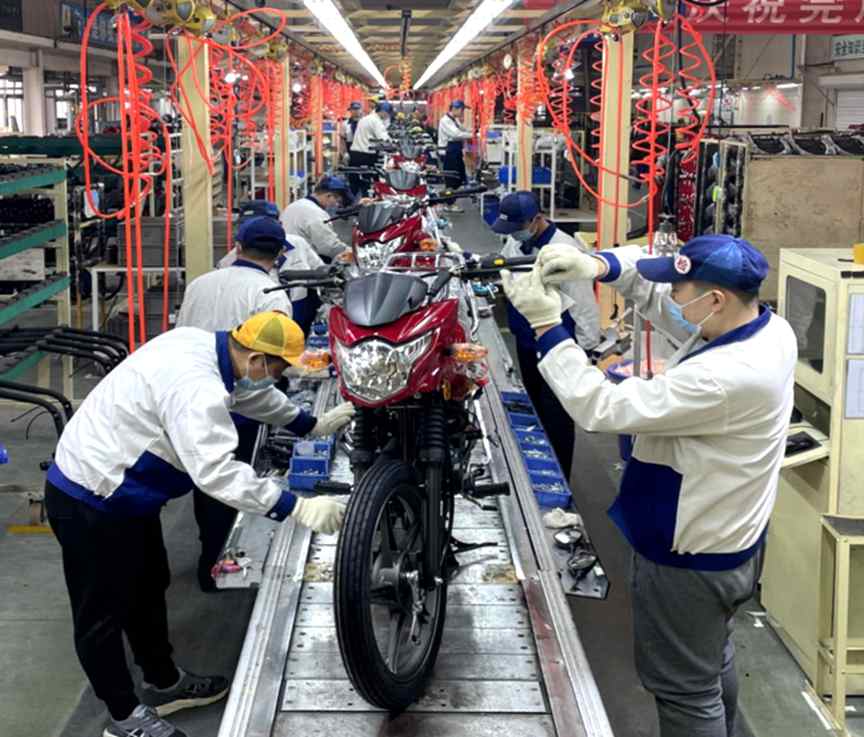
Last week, a friend in foreign trade asked me: “I’m currently running an electric bicycle assembly line. Next year, I plan to add a motorcycle assembly line and a tricycle assembly line. Do I need to build three separate workshops?”
My answer was straightforward: Absolutely not.
Many new factory owners fall into this trap, thinking “electric” and “gasoline” are worlds apart and require completely different motorcycle assembly lines. But in the eyes of us equipment guys, the power source doesn’t matter at all. There are only two things that determine what kind of equipment you need: How heavy is the frame? And how much torque is needed during assembly?
As long as you nail these two points, your electric vehicle assembly line can be incredibly versatile.
To give you a clear idea, let’s compare the three most common vehicles. See what kind of specs your tricycle assembly line or motorcycle production line really needs:
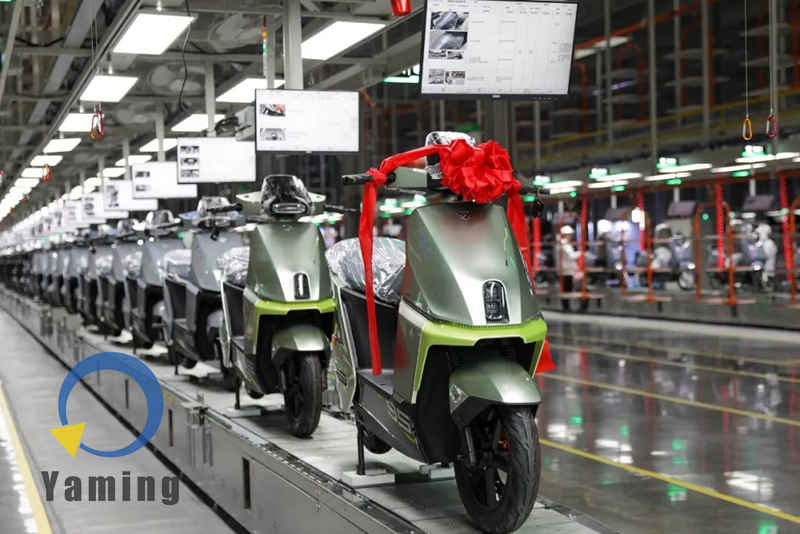
Electric Bicycle (Two-wheeler): This is the lightest, with a frame weighing only about 50-60 kg and a motor of 250-350W. This kind of electric bicycle assembly line has the lowest requirements; a chain pitch of 50.8mm is enough. It’s all about being light and flexible.
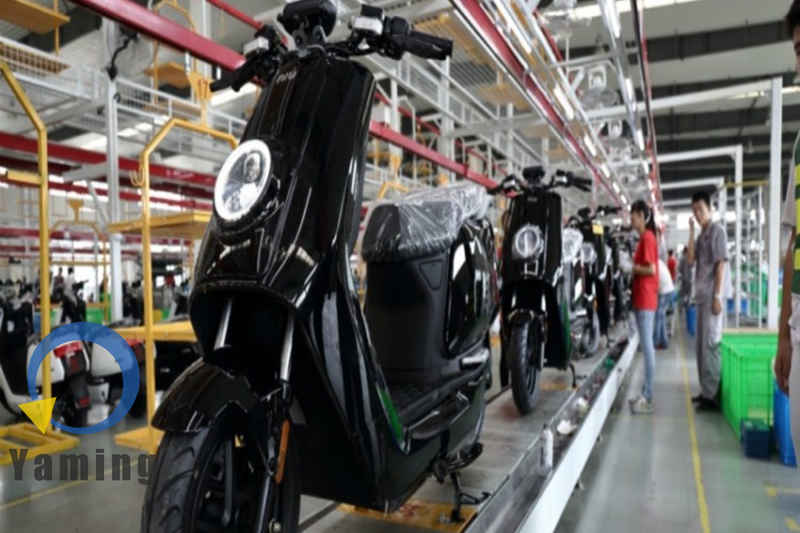
Fuel Motorcycle: The weight goes up to 100-150 kg. Because you have to install an engine, the torque during assembly is high, so the line must be stable. For this type of motorcycle assembly line, an 80mm chain pitch is usually used to ensure the frame doesn’t shake when tightening bolts.
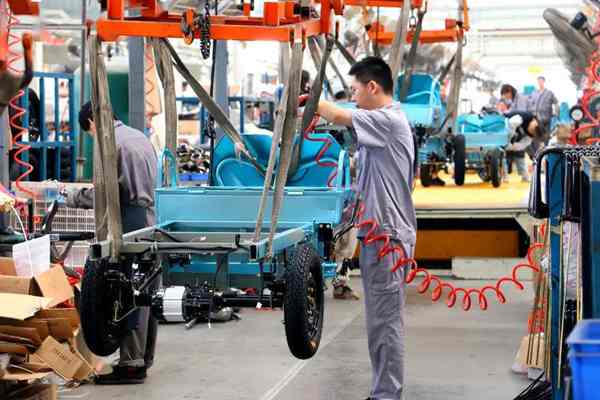
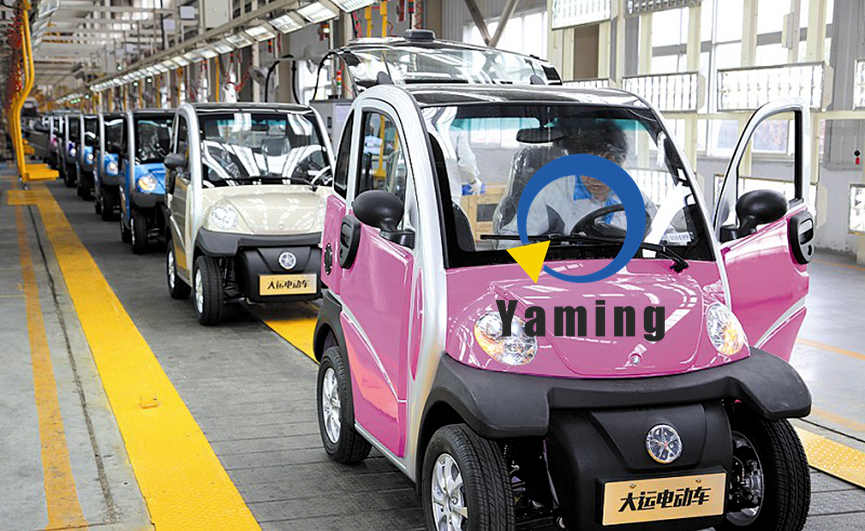
Cargo/Passenger Tricycle: This is the “heavyweight champion.” The frame alone often weighs 240-250 kg, and the vehicle length is nearly 3 meters. This type of tricycle assembly line has extremely high load-bearing requirements. The chain pitch must be 100-150mm; otherwise, the chain will easily stretch and deform under heavy loads over time.
See the difference? A tricycle is 4-5 times heavier than an e-bike. So, whether you run on gas or electricity, as long as your product range includes tricycles, your line must be built to the standards of a heavy-duty motorcycle assembly line.
Now, let’s talk about equipment selection. There are mainly two installation methods on the market: the in-ground “tow chain” and the floor-mounted “plate chain conveyor.”
If you’re building heavy trucks or harvesters, there’s no choice — you have to dig a pit. But since we’re dealing with motorcycles, e-bikes, and tricycles, it’s a different story:
In-ground tow chain: Digging pits, pouring concrete — it takes a long time, costs a lot, and cleaning up oil and dirt later is a nightmare.
Plate chain conveyor: Just stand a few steel legs on the floor and tighten the anchor bolts. Each pallet can carry 200-500 kg, which is more than enough for our tricycles under 250 kg.
The most crucial part: No pit digging! Rent an old workshop, as long as the floor is concrete, you can install it the day after delivery. For bosses who want to start production quickly or move factories often, this kind of electric vehicle assembly line is the most worry-free solution.
Many bosses only look at how thick the chain is when choosing equipment. But there’s a small detail that greatly affects how well your motorcycle assembly line works — the adjustable foot pads.
In factories down south, or in some older workshops, the floor is never perfectly level. If the conveyor is installed even slightly crooked, you’re in big trouble:
That’s why we equip every support leg with an adjustable foot pad (±30mm up and down). Don’t underestimate these 3 centimeters. A local installation worker with a wrench can level the entire tricycle assembly line like a mirror in half a day. No need to hire expensive senior technicians.
Since you’re building multiple vehicle types on one line, how do you switch the fastest? This is the efficiency question every boss cares about.
Our pallets are designed to be modular, with different “fixtures” for different vehicles, allowing your electric bicycle assembly line and motorcycle production line to switch seamlessly:
For e-bikes: Use a flat pallet with rubber pads to prevent scratching the paint on lightweight frames.
For motorcycles: Add a front wheel positioning slot to the pallet so the front end doesn’t wobble when installing the engine.
For tricycles: Add a rear axle cradle and anti-slip bumps to the pallet. Because tricycles require high torque during assembly, you need to prevent frame deformation.
How to switch? Simply loosen 4 bolts on each pallet and replace the fixture. With a skilled worker, you can switch the entire line from “e-bike mode” to “tricycle mode” within 30 minutes. Run the electric bicycle assembly line in the morning and the tricycle assembly line in the afternoon. One line handles it all, maximizing your production capacity.
If you want me to help you design a solution, don’t just say “I need an assembly line” — I can’t give you an accurate price that way. Just tell me these three things:
Maximum weight: Not the empty frame, but the maximum weight of the fully loaded pallet with all components (e.g., a cargo tricycle fully loaded at 250kg).
Maximum torque: What is the maximum torque value of your pneumatic or electric tightening tools? This determines how strong the pallet locking mechanism needs to be.
Workshop drawing: Length × width? Is the floor concrete or tile? (Concrete is highly recommended for stability).
With this information, I can help you determine the chain pitch, support leg spacing, and motor power (a light-duty electric bicycle assembly line uses 2.2kW, while a mixed motorcycle assembly line running tricycles recommends 5.5kW).
Building a factory isn’t easy; every penny must be spent wisely. If you’re planning your product line now, remember these three points: No pit digging, no need to buy three separate lines, and choose a plate chain line with good leveling.
If you’re struggling with workshop layout or unsure about the right configuration for your vehicles, feel free to send me your vehicle photos and workshop sketch. Even if you don’t end up buying from me, I’ll have our engineers take a look. Our experience can help you avoid many unnecessary detours.