Low‑speed four‑wheel electric vehicles are mainstream short‑range mobility vehicles. They feature compact body size, easy operation and low running cost for daily short‑distance travel. Various two‑door four‑seat low‑speed mobility vehicles are mass‑produced through low‑speed four‑wheel vehicle assembly lines and four‑wheeler production lines. The complete manufacturing system covers full procedures from component processing to finished‑vehicle off‑line inspection to realize standardized vehicle manufacturing.
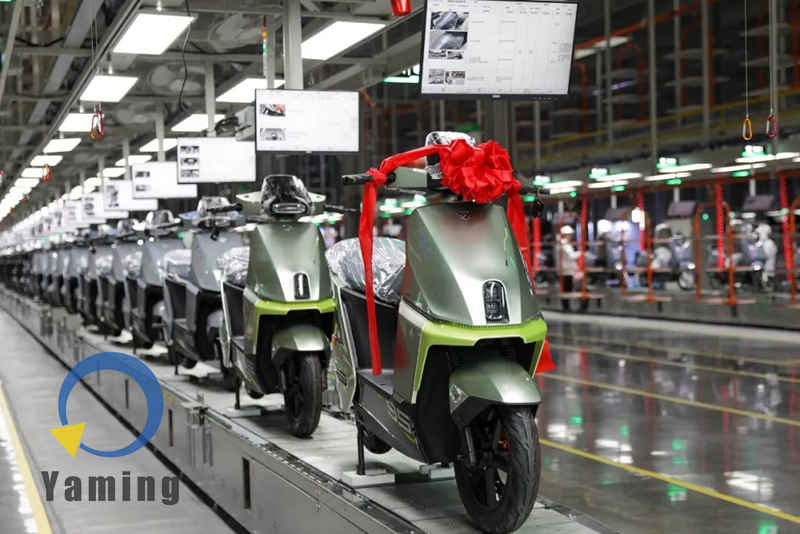
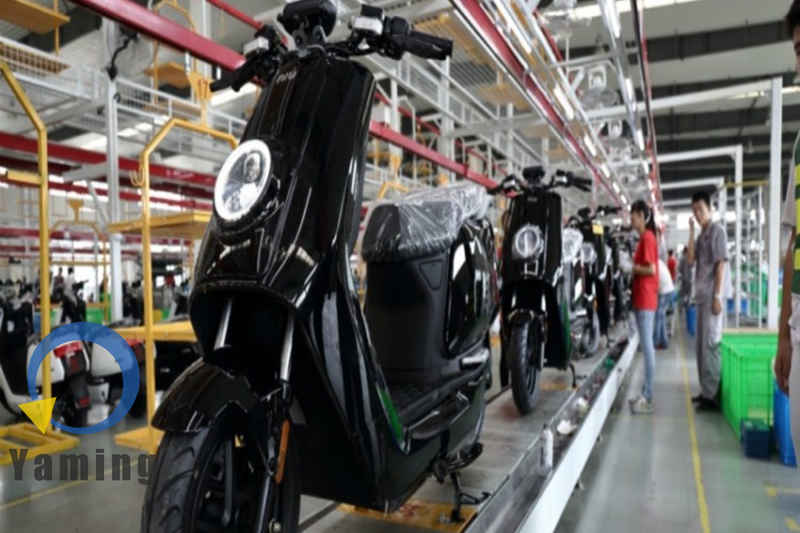
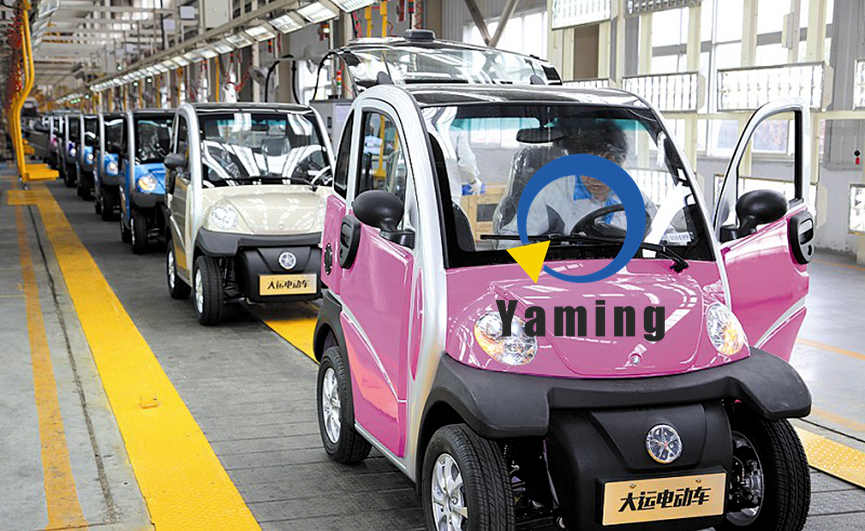
The photos show the actual workshop scene of standardized low‑speed four‑wheel vehicle assembly line and four‑wheeler production line. Plate‑chain conveyor lines extend along the workshop. Yellow floor safety markings define working aisles of the assembly line. Multi‑color low‑speed four‑wheel vehicles in pink, beige, blue and other colors are arranged orderly on the line. Operators sit inside vehicles to complete interior fitting, electrical connection and commissioning. Overhead hanging tooling, lighting and material delivery systems are installed, representing a standard modern assembly scenario for low‑speed four‑wheel mobility vehicles.
1. Basic Workshop Parameters
- Process System: Complete four major vehicle manufacturing processes: stamping, welding, painting and final assembly. Supporting facilities include frame welding line, electrophoretic coating line, low‑speed four‑wheel vehicle assembly line and finished‑vehicle inspection line.
- Conveyor Type: Floor‑mounted plate‑chain assembly conveyor. The effective length of the four‑wheeler production line ranges from 180 m to 260 m. Workstations operate in segmented mode. Vehicles move step‑by‑step along the line while operators finish assembly at fixed stations.
- Production Capacity: Designed annual output of a single low‑speed four‑wheel vehicle assembly line: 50 000 units. Tact time: 4‑6 minutes per unit under two‑shift operation. Multiple low‑speed four‑wheel vehicle assembly lines in the plant deliver a combined annual capacity up to 500 000 units for three‑wheel and four‑wheel vehicles.
- Workshop Equipment: Automatic frame welding equipment, electrophoretic painting systems, over 100 sets of finished‑vehicle inspection equipment including wheel alignment tester, brake tester, lamp tester, water‑spray leak‑testing booth and in‑plant test track.
- Workstation Layout: Seven major process stations: chassis assembly, power unit mounting, body‑chassis marriage, interior fitting, electrical wiring, vehicle commissioning and off‑line inspection.
2. Production Workflow (Matching the Photo Scene)
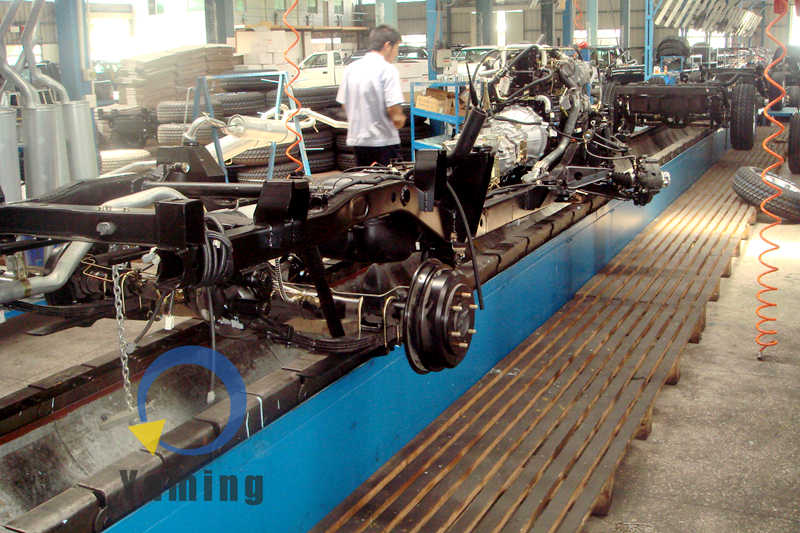
- Chassis Station: Starting station of the four‑wheeler production line. Assemble frame, drive motor, rear axle, shock absorbers and brake assemblies, and lay out vehicle wiring harnesses.
- Body‑chassis Marriage Station: Fasten painted body shell onto the chassis. Fit doors, lamps and exterior trims. (In the photo, doors are already fitted and vehicles are at interior commissioning phase.)
- Interior Fitting Station (As shown in the picture): Install seats, steering wheel and instrument panel, arrange on‑board electrical components. Operators enter vehicle cabins to connect switches, controllers and wiring. Doors are kept open for easy access. This is a key fine‑assembly step on the low‑speed four‑wheel vehicle assembly line.
- Battery Assembly Station: Mount power battery packs and connect high‑voltage connectors to ensure stable power supply.
- Vehicle Re‑check Station: Tighten full‑vehicle bolts, inspect connector plugs, component fit‑up and exterior appearance.
- Off‑line Inspection Line: Conduct sequential tests for braking performance, lighting, wheel side‑slip and water‑spray sealing performance to eliminate assembly defects.
- Dynamic Road Test: Real‑vehicle tests on the in‑plant test track covering forward/reverse travel, steering, braking and climbing performance. Qualified units are transferred to finished‑goods warehouse.
3. Product Features (Dayun Low‑speed Four‑wheel Vehicle in the Photo)
It is a compact two‑door four‑seat low‑speed four‑wheel electric vehicle designed for daily short‑distance mobility. The four‑wheeler production line supports flexible mixed‑model production, enabling simultaneous manufacturing of vehicles in pink, beige, blue and other colors with high production flexibility and fast model iteration.
Note: Low‑speed four‑wheel vehicles not listed in official MIIT vehicle catalog cannot obtain motor‑vehicle license plates. They can only be used in enclosed premises or restricted zones in compliance with local regulations.
4. Auxiliary Facilities & Quality Control
- Over‑head Workshop Facilities: Hanging material conveyors, workstation lighting and tool hangers. Parts are delivered to respective stations to improve efficiency of the low‑speed four‑wheel vehicle assembly line.
- Floor Layout: Yellow safety isolation lines separate working zones of the four‑wheeler production line from material transit lanes for safe site management.
- Quality Control: Assembly records are archived for every vehicle. Critical bolt torque is strictly controlled. Full‑range off‑line inspection is implemented. Non‑conforming vehicles are sent back for rework to guarantee consistent finished‑vehicle quality.